
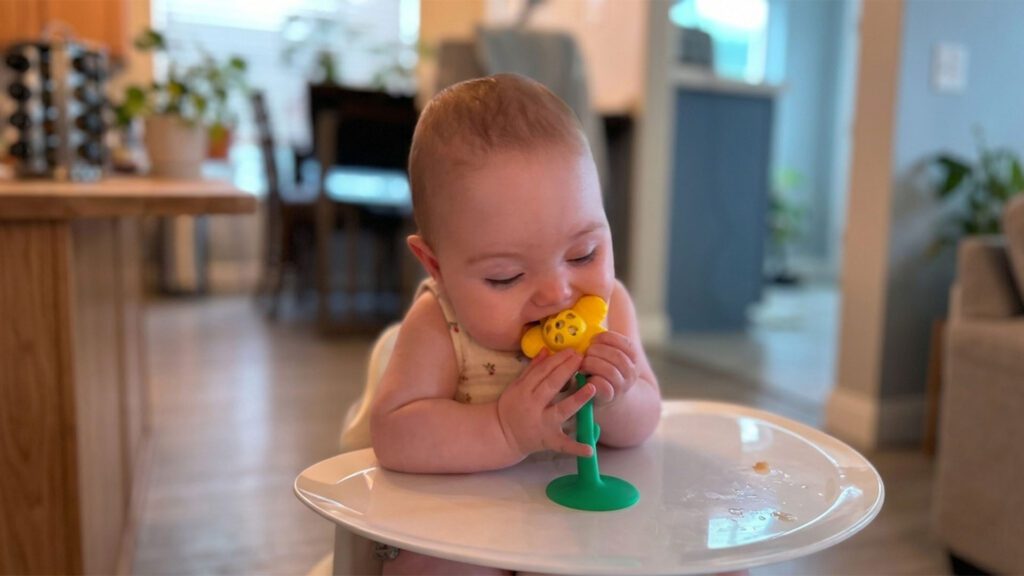
If you’re reading this at 3:00 AM while a tiny human tries to gnaw on your collarbone like it’s a chicken wing, welcome to the club. My name is Jojo, and honestly, if I could give you a giant cup of coffee through the screen right now, I would. My own journey through the “Drool Apocalypse” with my firstborn involved a lot of ruined t-shirts, way too many Google searches at midnight, and a very steep learning curve on what actually works versus what’s just clever marketing.
Teething isn’t just a milestone; it’s a full-blown family event. One day your baby is a sweet, giggling angel, and the next, they’re a fussy, feverish little beaver looking for anything—literally anything—to shove in their mouth. It’s heart-wrenching to watch. But here’s the thing I realized after my third shirt was soaked through: finding teething pain relief baby style isn’t about buying the most expensive gadget on Instagram. It’s about safety, common sense, and a few old-school tricks that actually stand the test of time.
1. The Power of the “Cold-But-Not-Frozen” Washcloth
Let’s start with the cheapest, easiest trick in the book. I used to think I needed fancy vibrating toys, but my grandmother was right on this one. Grab a clean washcloth, dip it in water (or chamomile tea if you want to be extra fancy), wring it out, and pop it in the fridge.
But here is where most moms—myself included, the first time around—mess up: Don’t freeze it rock solid. I thought “colder is better,” right? Wrong. A frozen-solid cloth can actually bruise those delicate, swollen gums or even cause a weird kind of frostbite on their lips. You want it chilled and firm, but still pliable. The texture of the terry cloth acts like a tiny massage for the gums while the cold numbs the ache. It’s a classic for a reason.
2. Transitioning to 100% Food-Grade Silicone
I’ve seen a lot of debate lately about plastic vs. wood vs. silicone. To be totally blunt, I’ve moved away from plastic entirely. Most “BPA-free” plastic can still feel a bit “chemically” to me, and if it’s too hard, it doesn’t give that satisfying “squish” babies crave.
I’m a huge advocate for 100% food-grade silicone. It’s hypoallergenic, which is a big deal because teethers spend about 90% of their life covered in spit and rolling around on the floor. It doesn’t harbor mold like some of those hollow plastic toys (we’ve all seen those horrifying “mold inside the bath toy” videos, right?). When I was designing the Joyfulia collection, I obsessed over this. Our Sunnyflower Teether, for instance, uses the same grade of silicone used in high-end medical supplies. It’s soft enough to be gentle but tough enough that a baby won’t rip a chunk off.
3. The “Wearable” Hack (Because Picking Up Toys is a Full-Time Job)
Can we talk about the “gravity game” for a second? Your baby drops the teether, you pick it up, you wash it, you give it back, and two seconds later—clink—it’s back on the floor. It’s exhausting.
This is why I’m such a fan of wearable teethers. It’s not just about convenience; it’s a safety thing too. A teether that’s strapped to a wrist (like a little watch) doesn’t end up covered in dog hair or floor dust. I remember being at a Target once, and my daughter dropped her favorite ring teether right in the middle of the cleaning supplies aisle. I didn’t have a wipe, I didn’t have a sink, and she was screaming. That was the “Aha!” moment for me. Wearable designs mean the relief stays where it belongs: within reach.
4. Cold Fruit in a Mesh Feeder
If your baby has started solids (usually around 6 months), this is a game-changer. Put a piece of chilled (again, not frozen solid!) pear or strawberry inside a silicone or mesh feeder.
I prefer the silicone feeders over the mesh ones because mesh is a nightmare to clean—seriously, trying to get banana pulp out of mesh is my personal version of hell. But the concept is brilliant. They get the cold relief, a yummy taste, and zero risk of choking on a big chunk of fruit. It keeps them busy for at least ten minutes, which in “Mom Time” is basically a spa day.
5. Gentle Gum Massages (The “Finger” Method)
Sometimes the best tool is the one you were born with. If your baby is refusing every toy you offer, try just using your finger. Make sure your hands are scrubbed clean (obviously), and gently but firmly rub their gums in a circular motion.
I used to do this while singing a specific “teething song” I made up. It sounds silly, but the combination of the physical pressure and the sound of my voice seemed to ground my son when he was spiraling into a meltdown. You’ll feel where the tooth is about to erupt—it’ll feel like a little hard lump under the surface. Pressure on that spot actually helps the tooth break through the “wall,” providing long-term relief.
6. Real Talk: Why I’m Wary of Amber Necklaces
Okay, I’m going to get some pushback on this, but I have to be honest. I see those “Baltic Amber” necklaces everywhere. The theory is that they release succinic acid that acts as a natural painkiller.
Honestly? I don’t buy it. More importantly, the FDA doesn’t buy it either. My biggest issue isn’t even whether the amber “works”—it’s the strangulation and choking risk. Putting a cord around a baby’s neck, or having small beads that could snap off, is a massive safety hazard. I know “natural” is trendy, but in this case, “natural” can be dangerous. If you really want that succinic acid, there are safer ways to find it than a necklace. I’d much rather stick to a solid, one-piece silicone toy that I know won’t break into pieces while I’m not looking.
7. The Fridge, Not the Freezer
I know I mentioned this with the washcloth, but it applies to everything. If you bought a gel-filled teether—actually, wait, let me stop you there. Throw the gel-filled ones away. Seriously. If your baby has even one sharp little tooth, they can puncture that plastic, and you do not want them swallowing whatever “non-toxic” goo is inside.
Stick to solid silicone. And when you chill it, put it in the fridge. I found that if I left teethers in the freezer, they became so hard they actually hurt my baby’s mouth. Think about it: would you want to chew on a block of ice when your gums are already sore and sensitive? Probably not. A nice, cool 40°F (about 4°C) is the sweet spot for reducing inflammation.
8. Distraction is a Form of Medicine
Sometimes the “pain” is 50% physical and 50% just being over it. Teething is frustrating for babies. Their mouth feels weird, they’re drooling, and they don’t understand why.
This is where “sensory teethers” come in. I love teethers that double as toys. Our Sunflower Teether Rattle is a favorite of mine because it has a suction base. You can stick it to a high chair tray or a bathtub edge. The “petals” are soft silicone for chewing, but the center has beads that rattle. When my kids were at their crankiest, the sound of the rattle would distract them just enough to stop the crying, and then they’d settle into a good, productive chew. It’s about shifting the focus from “my mouth hurts” to “hey, what’s that noise?”
9. Nighttime Management (The Hardest Part)
Teething pain always seems to get worse at night. Is it because there are fewer distractions? Is it a horizontal pressure thing? Probably both.
My “pro-tip” for nights: do a big gum massage right before the final feeding. It helps “tire out” the nerves in the mouth. Also, keep a spare chilled teether in a small insulated bag on your nightstand. That way, when the 2:00 AM wake-up call happens, you don’t have to trek all the way to the kitchen and deal with the bright fridge light. You can just hand over the cool toy and hopefully get back to sleep.
10. Knowing When to Call the Pediatrician
Lastly, don’t be afraid to trust your gut. There’s a common myth that teething causes high fevers and diarrhea. While a slight “teething fever” (around 99°F) can happen because of inflammation, a true fever over 101°F is usually something else.
If your baby is inconsolable, or if the symptoms don’t match up with a tooth popping through, call the doctor. I used to feel like I was “bothering” my pediatrician, but then I realized: that’s literally what they’re there for. Don’t let a “teething” label mask a real ear infection or a cold.
Let’s Chat!
Writing this actually brought back so many memories of those blurry, drool-covered days. It’s a tough phase, but I promise you’ll get through it. One day, you’ll look back and realize you haven’t seen a teether in months, and your kid is eating a whole apple with a mouth full of teeth.
If you’re in the thick of it right now, which method is working for you? Or are you dealing with one of those “stubborn” teeth that just won’t break through? Drop a comment below—I’d love to hear your “war stories” or answer any questions you have about specific materials!
Happy (safe) teething, Mama!