If you’re reading this, you’re probably neck-deep in the “drool phase.” Your coffee is cold, your shirt has a permanent wet spot on the shoulder, and your little one is trying to shove their entire fist (and maybe your big toe) into their mouth.
Welcome to teething. It’s a milestone, sure, but watching your baby struggle with sore gums is the worst. Naturally, you grab a teether. But here’s the thing—not everything on the shelf (or in your social media feed) is actually safe. Let’s cut through the noise and talk about what really matters when it comes to baby teether safety.
1. Forget “BPA-Free” — Look Deeper
Years ago, “BPA-Free” was the gold standard. In 2026, that’s just the bare minimum. Since babies have super-thin oral mucosa (meaning they absorb stuff through their gums way faster than we do), the material is everything.
- 100% Food-Grade Silicone: This is my top pick. It’s soft, it’s hypoallergenic, and unlike plastic, it doesn’t harbor hidden mold or bacteria. Plus, it’s tough—it won’t crack or chip when those sharp little “rice grain” teeth finally pop through.
- A Hard “No” to Liquid-Filled Teethers: Those old-school gel-filled rings? Skip ’em. If a baby punctures the plastic, they’re swallowing “mystery liquid.” Stick to solid, one-piece silicone designs. It’s just more peace of mind.
2. The “Alphabet Soup” of Safety (ASTM & CPC)
I know, reading safety codes is boring. But in the US, these letters are your best friend. Before you hit “Add to Cart,” check for:
- ASTM F963-23: This is the big one for toy safety.
- CPC (Children’s Product Certificate): This means a third-party lab actually tested the thing.
If a brand doesn’t mention these in their product description, keep scrolling. Your baby isn’t a guinea pig for unverified factories.
3. Design: The “Choke-Proof” Checklist
A teether can be made of organic unicorn dust, but if the design is bad, it’s dangerous.
Avoid the “Add-ons”
Look for one-piece construction. Avoid anything with glued-on beads, clips, or tiny bells. If it can snap off, it’s a choking hazard. Simple as that.
The “Drop” Factor
We’ve all been there: you give your baby a teether, and three seconds later, it’s on the dirty floor of a Target aisle. This is why I love suction and wearable designs. Something like the Joyfulia Sunnybunny Wearable Teether is a lifesaver — it stays on their wrist, it’s 100% pure silicone, and the “ears” are textured perfectly to reach those back molars.
4. Keeping it Clean (Without Losing Your Mind)
Babies drop things. Babies drool. It’s a mess.
- Daily: A quick rinse with warm, soapy water (fragrance-free!) does the trick.
- Deep Clean: If you went with 100% silicone, you’re in luck. Most are dishwasher safe (top rack only!) or can be tossed in boiling water for a few minutes.
- The Tug Test: Before you hand it over, give it a good pull. If you see any tears or thinning, toss it. It’s not worth the risk.
5. “Natural” Isn’t Always Safer
There are a lot of “mom-hacks” floating around TikTok. Be careful with these:
- Amber Necklaces: Huge no from the FDA. They’re a strangulation and choking risk. Just don’t.
- Frozen Bagels/Carrots: They seem like a good idea until a chunk snaps off.
- The “Fridge” Hack: Instead of freezing teethers (which can be too hard and bruise sensitive gums), put them in the refrigerator. That cool, firm pressure is like magic for inflammation.
FAQ: What Moms Are Asking
Q: When should I start using a teether?
Usually around 4 months, but some babies are “early bloomers.” If they’re gnawing on their hands and drooling like a faucet, they’re ready.
Q: Are those rattles with suction bases safe?
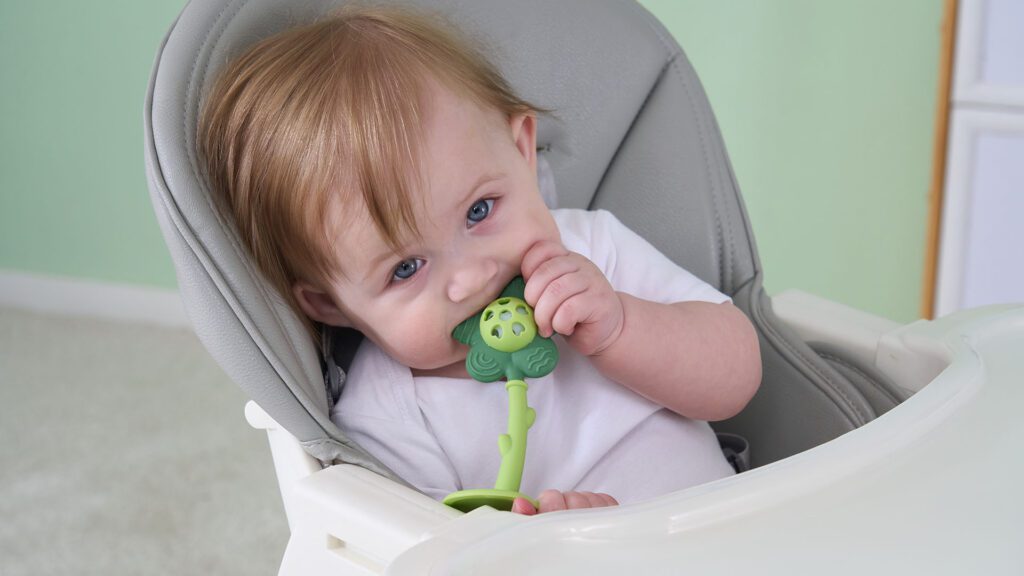
Definitely, as long as they’re made of food-grade materials. The Joyfulia Sunnyflower Teether Rattle is a great example—it suctions to the high chair tray so they can chew and play while you actually get to eat your own lunch for once.
Q: How do I know it’s real silicone?
Real silicone shouldn’t have a strong chemical smell. Also, look for that CPC certification we talked about—reputable brands won’t hide their testing.
Teething is a rough phase, but it doesn’t have to be a scary one. Stick to the safety basics: certified materials, one-piece designs, and regular “tug tests.” At Joyfulia, we’re parents too. We designed our Bunny Watch and Sunflower series because we wanted stuff that was safe enough for our own kids and practical enough for our busy lives. You’ve got this, Mama. This phase won’t last forever, but a safe teether will get you through it a whole lot easier!